LMS
LMS
Last updated on 19th May 2026| 13116

- Emerging AI Trends In IT Industry
- Rise of Agentic AI Workflows
- Multimodal AI Models
- Hyper-Personalized Enterprise Software
- AI-Driven Cybersecurity Defense
- Edge AI and On-Device Processing
- Open-Source AI Model Expansion
- Sustainable and Green AI Practices
- Conclusion
Emerging AI Trends In IT Industry
The AI Trends In IT sector is moving at a blistering pace right now, and keeping up with the latest advancements can feel completely exhausting. Just when companies figure out how to implement basic chatbots, the market shifts toward entirely new paradigms that change the rules of the game. We are moving past the phase where artificial intelligence was just a neat tool for generating text or images. Today, Artificial Intelligence Training is becoming an autonomous actor inside corporate networks, making decisions, processing live video feeds, and even writing its own internal code to solve problems. For IT professionals, ignoring these emerging trends is a guaranteed way to make your skill set obsolete within a couple of years. Companies are no longer investing in AI just to look innovative they are investing because these new models directly reduce operational costs and create massive competitive advantages. Understanding where this AI Trends In IT technology is heading over the next twelve to eighteen months allows you to position your career, your projects, and your team perfectly to capitalize on the next massive wave of enterprise adoption before your competitors do.
Rise of Agentic AI Workflows
The most significant shift happening right now is the move from passive chatbots to active AI agents. In the past, you had to sit at your computer, type a prompt, wait for the AI to answer, and then manually take the next step. Agentic AI completely flips this dynamic. You give the AI a high-level goal, like “analyze last quarter’s sales data and email the report to the marketing team,” and the Artificial Intelligence Training autonomously figures out how to do it. It breaks the task down, writes the necessary code, queries the database, drafts the email, and sends it without further human intervention and Expolre Top Trending Technologies . For IT teams, this changes how we build software. Instead of building applications that require constant human input, developers are now building frameworks where multiple AI agents talk to each other to complete complex business workflows. Mastering how to design these agentic loops and build safety guardrails around them is rapidly becoming the most highly sought-after skill in enterprise software engineering. Staying proactive with agentic workflow design ensures stronger opportunities, and focusing on safety guardrails builds credibility. Over time, this mastery positions you as a fresher who can confidently lead AI-driven enterprise projects.
Ready to Get Certified in Artificial Intelligence ? Explore the Program Now Artificial Intelligence Online Training Offered By ACTE Right Now!
Multimodal AI Models
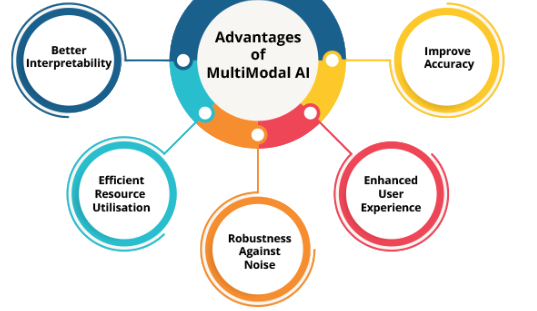
- Processing Multiple Data Types: Traditional AI models were strictly separated. You had a text model, a separate image model, and a completely different audio model. Multimodal AI smashes all these together, allowing a single system to read text, look at an image, and listen to audio simultaneously to understand context.
- Enhancing Customer Support: Enterprise chatbots are becoming vastly superior because they can now process a screenshot a user uploads, read the error text in the image, and cross-reference it with an audio recording of the user describing the problem, all in seconds.
- Revolutionizing Document Analysis: In the IT industry, processing massive legal contracts or technical manuals is changing and Certification in AI. Multimodal models can read a complex PDF, understand the layout of the charts on the page, and extract both the text and the visual data together.
- Real-Time Video Analysis: Security and retail IT systems are using multimodal AI to watch live video feeds. The AI can see an object left on a factory floor, read the warning label on it, and trigger an alert based on both visual and textual data.
- Creating Richer Applications: Developers are building apps that respond to voice commands while simultaneously analyzing the user’s facial expressions through the camera. This allows software to adapt its interface based on the user’s emotional state and input method.
- Predicting Threats Before They Happen: Traditional security software relies on known virus signatures to stop attacks. AI-driven defense systems analyze global network traffic patterns to predict and block zero-day attacks before the security community even has a name for the malware.
- Automating Incident Response: When a breach occurs, every second counts. AI security tools can automatically isolate infected servers, revoke compromised user credentials, and ai Can Do AI Movie List block malicious IP addresses in milliseconds, long before a human administrator wakes up.
- Hunting for Insider Threats: AI is incredibly good at spotting anomalies in human behavior. If an employee suddenly downloads gigabytes of sensitive data at three in the morning, the AI flags it immediately, catching insider threats that traditional rules-based systems would miss.
- Securing AI Models Themselves: AI models freshers can choose Career Path for AI. Cybersecurity professionals are now building defenses against prompt injection attacks and data poisoning, ensuring that hackers cannot manipulate the company’s AI tools.
- Reducing Alert Fatigue: Security operations centers are overwhelmed with thousands of false-positive alerts daily. AI acts as an intelligent filter, automatically resolving the noise and only escalating the genuinely critical threats to human engineers.

Develop Your Skills with Artificial Intelligence Training
Weekday / Weekend BatchesSee Batch DetailsHyper-Personalized Enterprise Software
Enterprise software has historically been rigid, forcing thousands of employees to use the exact same interface and workflows. Emerging AI trends are completely destroying this one-size-fits-all approach. AI is now being embedded directly into enterprise tools to dynamically change the user interface based on individual behavior. If the system notices you always check inventory levels first thing in the morning, it will automatically reorganize your dashboard to put that data front and center and AI Skills to Master. If you struggle with complex data entry forms, the AI might simplify the interface or automatically pre-fill fields based on your past behavior. For IT teams, this means moving away from static web development and toward building highly dynamic, AI-rendered interfaces. The backend systems must now track user behavior in real-time and feed that data to machine learning models that constantly rewrite the frontend. This creates a massive shift in how software architects design user experiences for large corporations. Staying proactive with personalized UI design ensures stronger opportunities, and focusing on dynamic interfaces builds credibility. Over time, this mastery positions you as a fresher who can confidently deliver adaptive enterprise solutions.
To ExploreArtificial Intelligence in Depth, Check Out Our Comprehensive Artificial Intelligence Online Training To Gain Insights From Our Experts!
AI-Driven Cybersecurity Defense
Looking to Master Machine Learning? Discover the Artificial Intelligence Expert Masters Program Training Course Available at ACTE Now!
Edge AI and On-Device Processing
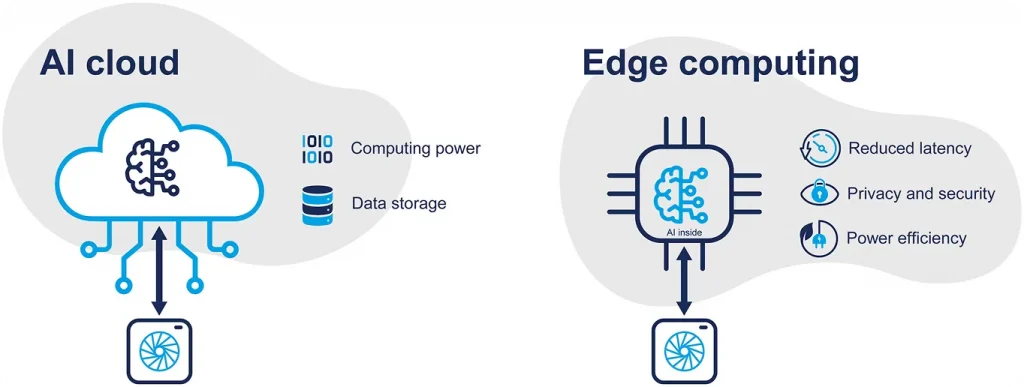
For the last decade, almost all AI processing happened in massive cloud data centers. You would send data up to the cloud, the AI would process it, and send the result back. Emerging trends are rapidly pushing AI processing down to the “edge,” meaning the AI runs directly on your phone, your laptop, or factory sensors. This is a massive game-changer for the IT industry because it eliminates network latency and solves major privacy concerns. If an AI model can analyze a manufacturing defect on a factory camera without ever sending the video feed to the cloud, the response time drops to milliseconds and the company avoids storing sensitive video data externally ChatGpt-4. For developers, this means learning how to compress and optimize large language models so they can run on low-power hardware. Understanding edge computing architectures and tools like TensorFlow Lite is becoming an absolute necessity for IT professionals working in IoT, mobile development, or industrial tech. Staying consistent with edge AI practice ensures stronger preparation, and focusing on optimization builds credibility. Over time, this mastery positions you as a fresher who can confidently manage AI systems across devices.
Open-Source AI Model Expansion
While massive tech companies are fighting to build the biggest proprietary AI models, a massive counter-trend is happening in the open-source community. Highly capable AI models are being released to the public for free, allowing IT teams to download and run them on their own internal servers. This is fundamentally changing how enterprises adopt AI. Previously, companies were terrified of feeding their private data into APIs owned by OpenAI or Google. Now, they can download an open-source model, host it on their own secure cloud infrastructure, and fine-tune it on their private corporate data without ever sending a byte of information outside the company firewall. For IT professionals, learning how to deploy, manage, and fine-tune these open-source models using tools like Hugging Face and Kubernetes is a massive career advantage now see How To Build a Career In AI and Mechine learning. Companies are desperately looking for engineers who can build secure, internal AI platforms using these free, community-driven tools rather than relying on expensive, external corporate subscriptions. Staying proactive with open-source adoption ensures stronger opportunities, and focusing on secure deployment builds credibility. Over time, this mastery positions you as a fresher who can confidently manage enterprise AI platforms.
Preparing for Artificial Intelligence Job Interviews? Have a Look at Our Blog on Artificial Intelligence Interview Questions and Answers To Ace Your Interview!
Sustainable and Green AI Practices
As artificial intelligence models grow larger and more complex, they are consuming an absolutely staggering amount of electricity. Training a single massive language model can consume as much power as a small town uses in a year. As enterprises scale their AI operations, the carbon footprint and energy costs are becoming a major boardroom concern. This has sparked a rapid trend toward Green AI, where IT departments are forced to optimize their models for energy efficiency rather than just accuracy. Engineers are now tasked with pruning neural networks to make them smaller, using specialized Artificial Intelligence Training low-power chips for inference, and shifting AI workloads to data centers powered by renewable energy. For IT professionals, understanding the computational cost of AI is no longer just a technical detail it is a financial and environmental requirement. Learning how to build highly efficient machine learning pipelines that use less memory and processing power is quickly becoming a unique and highly valuable specialization in the enterprise tech space. Staying consistent with energy-efficient practices ensures stronger preparation, and focusing on optimization builds credibility. Over time, this mastery positions you as a fresher who can confidently contribute to sustainable AI innovation.
Conclusion
Staying relevant in the AI Trends In IT industry means keeping a very close eye on these emerging AI trends and understanding how they impact your specific niche. The shift toward agentic workflows, multimodal processing, and edge computing is completely rewriting the rules of software architecture. Companies are no longer looking for IT workers who just know how to maintain legacy servers or write basic web forms. They are hunting for professionals who understand how to deploy open-source models securely, build dynamic AI-driven interfaces, and defend networks against AI-generated cyberattacks. The transition to this new era of technology is happening much faster than previous software shifts. You cannot afford to wait five years to see how these trends play out. Start experimenting with local Artificial Intelligence Training models, learn how edge devices process data, and study the basics of agentic frameworks. The IT professionals who actively ride this wave of innovation will find themselves leading the next generation of enterprise technology, while those who ignore it will simply be left behind. Staying curious with experimentation ensures stronger career growth, and focusing on adaptability builds credibility. Over time, this strategy transforms you into a professional who can thrive in the AI-driven IT ecosystem.